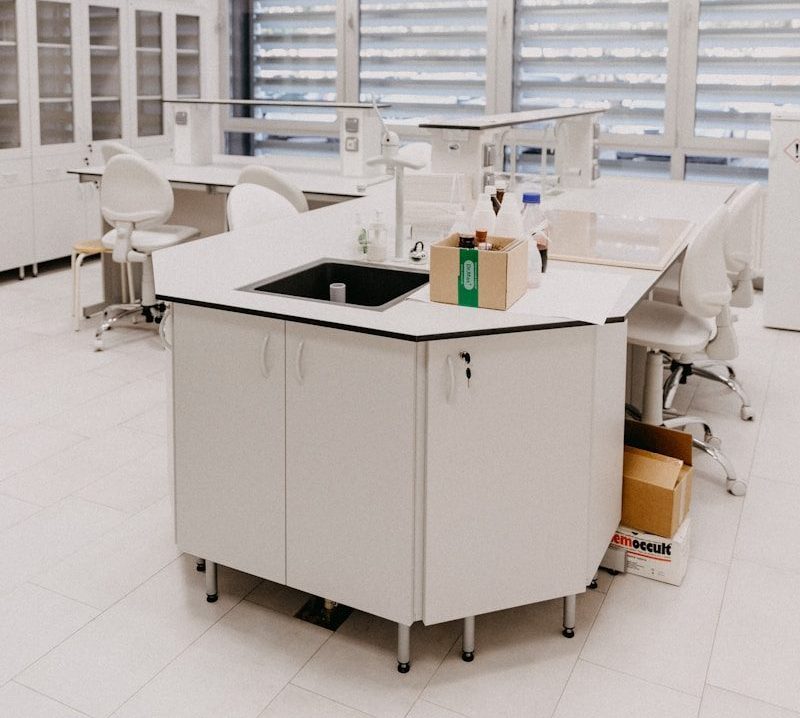
How to Plan a Laboratory Move in Boston or Cambridge
Moving a laboratory isn’t an ordinary commercial relocation.
An office contains desks, computers, files, and furniture. A research laboratory may contain sensitive instruments, specialized equipment, frozen biological materials, calibrated systems, delicate microscopes, and research that cannot simply be replaced.
That means a successful laboratory move begins long before moving day.
Build a Lab Relocation Team
Start by identifying the people responsible for different parts of the project.
Depending on the laboratory, that may include:
- Laboratory management
- Researchers
- Facilities
- IT
- Environmental health and safety
- Equipment vendors
- Building management
- Moving company representatives
Assigning responsibilities early prevents important tasks from falling between departments.
Inventory Everything
Create a detailed inventory before anything is packed.
Include:
- Equipment name
- Manufacturer
- Model
- Serial number
- Current room
- Destination room
- Dimensions
- Weight
- Power requirements
- Temperature requirements
- Special handling instructions
Photographs are also valuable.
For a large facility, consider assigning every item a label that corresponds to its exact destination.
Identify Equipment Requiring Vendor Support
Some instruments may require manufacturer-approved technicians for shutdown, preparation, recalibration, or restart.
Find that out early.
You don’t want to discover on moving day that a piece of equipment can’t legally or safely be disconnected by the moving crew.
Coordinate service technicians with the overall relocation schedule.
Plan the New Laboratory Before Moving
Ideally, every major item should have an assigned location before it leaves the existing facility.
Confirm:
- Electrical requirements
- Bench dimensions
- Door widths
- Elevator capacity
- Loading dock access
- Equipment clearance
- HVAC requirements
- Network connections
You should know exactly where critical equipment is going before the truck is loaded.
Prioritize Critical Equipment
Not everything has the same importance.
Create categories for equipment that must be operational first.
For example:
Priority 1: Equipment required immediately
Priority 2: Equipment needed within the first several days
Priority 3: Noncritical equipment and storage
This allows the move to be sequenced around restarting operations.
Treat Frozen Materials Separately
Frozen biological materials require a dedicated plan.
Temperature-sensitive materials cannot simply be handled like ordinary moving boxes.
Determine:
- Required temperature range
- Acceptable transport duration
- Packing method
- Monitoring requirements
- Backup procedures
- Who is authorized to receive the shipment
The moving schedule should minimize the time these materials spend outside their normal environment.
Protect Precision Instruments
Laboratory instruments may be sensitive to vibration, impact, orientation, temperature, or moisture.
Specialized packing may be required for microscopes, balances, HPLC equipment, analytical instruments, and other delicate systems.
Wellesley Moving’s laboratory division specifically handles equipment ranging from -80 freezers to HPLC machines and offers frozen biological packing and transportation services.
Minimize Downtime
One of the biggest costs of a laboratory relocation isn’t the move itself.
It’s lost productivity.
Create a sequence that allows critical functions to shut down as late as possible and restart as early as possible.
In some cases, relocating the laboratory in phases can keep portions of the operation functional throughout the transition.
Perform a Final Verification
Once equipment arrives, verify items against the inventory before the project is considered complete.
Check for:
- Correct destination
- Visible condition
- Missing components
- Required vendor setup
- Power and network availability
Document any issues immediately.
Laboratory Moving Requires Specialized Planning
Boston and Cambridge are home to an enormous concentration of universities, medical institutions, biotech companies, and research organizations.
For these organizations, moving isn’t simply about transporting furniture.
It’s about protecting expensive equipment, irreplaceable research, and business continuity.
Wellesley Moving provides specialized laboratory relocation services in Boston and beyond.
Contact our team to discuss your upcoming laboratory relocation and request a customized moving estimate.