All Posts
For most New Yorkers, especially families and healthcare or academic professionals, moving from New York to Boston trades a chunk of your rent for a shorter commute and better public schools. The single most useful next move is to request a moving quote from a mover like Wellesleymoving and spend a weekend comparing two or three Boston neighborhoods against your budget from NerdWallet’s cost calculator before you sign a lease.
TL;DR:
- Moving from New York to Boston can significantly lower housing costs, especially if you’re transitioning from Manhattan, but savings may be less if coming from outer boroughs.
- The move involves a 6 to 8-week planning process, including getting quotes, notifying current landlords, transferring utilities, and coordinating school and medical record transfers.
- Boston’s neighborhoods offer varied options, with Cambridge and Back Bay attracting academics and professionals, while areas like Newton and Wellesley appeal to families seeking good schools and suburban space.
- Transit in Boston is less extensive than New York’s subway, requiring careful neighborhood selection based on commute needs, especially for those relying on MBTA or parking.
- Winters are harsher, so flexibility in timing and proper preparation for snow are critical for a smooth relocation.
Table of Contents
- Boston vs New York: Who Benefits and How Life Will Feel Different
- Cost of Living and Housing: Current Numbers and Budget Framework
- Moving Logistics and Estimated Costs: Your 6 to 8 Week Timeline
- Best Boston Neighborhoods for NYC Transplants
- Transportation and Commuting Differences: MBTA, Driving, and Parking
- Weather and Seasons: Winter Prep and Move Timing
- Pros and Cons: A Quick Decision Checklist
- Navigating Utility Setup and Service Transfers in Boston After Your Move
- Registering Your Vehicle and Transferring Your Driver’s License in Massachusetts
- Understanding Tax Implications and Residency Requirements
- Why a Local, Experienced Mover Matters for This Route
- Get a Real Quote Before You Book Anything
- Sources
Boston vs New York: Who Benefits and How Life Will Feel Different
The math tends to favor Boston, but the lifestyle shift is what actually surprises people. New York runs on density and constant motion. Boston runs on a tighter radius, an earlier evening, and a much more visible connection between where you live and where you work.
If you’re used to a 45-minute subway haul from Astoria to Midtown, Boston’s compact footprint changes the rhythm of your day. Neighborhoods sit closer together, the nightlife scene is smaller and less varied, and the city leans harder into its university and hospital identity than its 24-hour identity. That’s not a downgrade, it’s a different bet.
Some New Yorker profiles benefit more than others:
- Families with school-age kids gain access to strong public school districts and more space per housing dollar.
- Academics and researchers land near Harvard, MIT, Boston University, and Northeastern, which anchor a job market built around higher education.
- Healthcare workers find a city where hospital systems are a dominant employer, not a side industry.
- Remote or hybrid tech workers get lower housing costs without leaving a major metro job market.
- Night owls and industry-specific creatives who thrive on Manhattan’s scale may feel the drop in density more than anyone.
If your life revolves around late-night restaurant openings, all-hours delivery, and a subway that runs at 3 a.m., Boston will feel smaller. If your priorities are schools, hospitals, or research institutions, it starts to feel like an upgrade.
Cost of Living and Housing: Current Numbers and Budget Framework
Housing is where the savings show up first. NerdWallet’s cost-of-living comparison shows Boston running meaningfully cheaper than Manhattan on housing and several everyday cost categories, and BestPlaces’ city comparison tool breaks that gap down into specific line items like utilities and groceries.
The borough matters more than the city. The savings gap is dramatic against Manhattan specifically. Compare Boston to Brooklyn or Queens instead, and the difference narrows considerably, since outer-borough rents already sit closer to what Boston neighborhoods charge.
That’s worth sitting with before you get too excited about “half the rent.” If you’re coming from Bushwick or Astoria rather than the Upper West Side, your actual savings will be smaller, though Boston still tends to win on space per dollar.
Before you commit, build a real household budget rather than relying on a single average rent figure. Include:
- Rent or mortgage, plus expected annual increases
- Utilities (Boston winters push heating costs higher than most New York apartments require)
- Massachusetts property tax rates if you’re buying, which differ from New York’s structure
- Daily or monthly commuting costs on the MBTA versus what you paid for a MetroCard
- Child care, which runs high in both metros but varies by neighborhood
- Renters or homeowners insurance, auto insurance if you’re adding a car
Run these numbers against your current spending before you start touring apartments. It’s the only way to know if the “Boston is cheaper” headline actually applies to your specific move.
Moving Logistics and Estimated Costs: Your 6 to 8 Week Timeline
Moving costs between New York and Boston depend on a handful of concrete variables, not a flat per-mile rate. The biggest drivers are the volume of your belongings, how difficult your buildings are to access (walk-up apartments, narrow stairwells, limited parking for the truck), whether you’re moving during peak season (Memorial Day through Labor Day, plus the first of any month), and whether you add insurance coverage or specialty handling for things like pianos, lab equipment, or artwork.
A 6 to 8 week runway gives you room to do this without panic:
- Weeks 7 to 8: Get quotes from two or three movers and book your date, especially if you’re moving in summer.
- Weeks 5 to 6: Notify your current landlord, start decluttering, and order packing materials if you’re packing yourself.
- Weeks 3 to 4: File your change of address with USPS, transfer or cancel utilities at your old place, and start setting up new utility accounts in Boston.
- Weeks 2 to 3: Enroll kids in their new school district and transfer medical records to Massachusetts providers.
- Week 1: Confirm arrival logistics with your mover, pack a essentials bag, and do a final utility check.
- Moving day: Walk the truck through your inventory list before it pulls away.
When you request estimates, come prepared with a room-by-room inventory, notes on stairs or elevator access, and your target dates. A long-distance moving checklist built specifically for multi-state moves is a useful reference point for what documentation to have ready.
Pro Tip: A quote that comes in dramatically lower than every other estimate you’ve gotten usually means the mover is planning to add charges later for stairs, bulky items, or “unexpected” volume. Get everything in writing before moving day.
Best Boston Neighborhoods for NYC Transplants
Boston’s neighborhoods each carry a distinct personality, and matching yours to the right one matters more here than it did in New York, where almost any neighborhood connects to almost any job via subway.
- Cambridge suits academics and tech workers who want walkability and proximity to Harvard and MIT.
- Back Bay and Beacon Hill appeal to former Manhattan residents who want brownstones, restaurants, and a dense urban feel without the size.
- Somerville fits younger renters and first-time buyers priced out of Cambridge who still want transit access.
- Jamaica Plain works for families wanting more space, green space, and a slower pace with a direct line downtown.
- Newton is a strong pick for families prioritizing school districts and single-family homes.
- The Wellesley area suits families and professionals who want suburban space, top-tier schools, and a manageable commute into the city.
Shortlist two or three, then spend a day actually walking them. Rent listings don’t tell you how a commute feels at 7:45 a.m. in February.
Transportation and Commuting Differences: MBTA, Driving, and Parking
The MBTA covers less ground than the New York subway and runs on a tighter schedule, especially late at night and on weekends. Expect longer waits outside rush hour and a system that shuts down earlier than New York’s.
- The MBTA’s four subway lines and commuter rail cover the core, but service thins out fast in the suburbs.
- Driving in Boston means dealing with resident parking permit systems in most neighborhoods, and street parking is genuinely scarce.
- Monthly garage parking downtown often runs comparable to or higher than a New York outer-borough spot.
- If you’re transit-first, prioritize neighborhoods on the Red or Orange lines.
- Car-owning families should weight neighborhoods with driveways or off-street parking heavily in their search.
Weather and Seasons: Winter Prep and Move Timing
Boston winters hit harder than New York’s. Expect more total snowfall and a real chance of at least one or two Nor’easters that can shut down streets and delay moving trucks for a day. If you have flexibility, aim for a spring or early fall move rather than January or February. If winter is your only option, confirm your new place has adequate insulation, buy a snow shovel before you need one, and check whether your vehicle needs winter tires for Massachusetts roads.
Pros and Cons: A Quick Decision Checklist
- Pros: Lower housing costs for many New Yorkers, strong public schools, nationally ranked healthcare access, and a dense cluster of universities driving the job market.
- Cons: A smaller nightlife scene, a more compact urban core, tougher winters, and genuinely difficult parking in most neighborhoods.
If the pros outweigh the cons for your situation, your next steps are simple: finalize a household budget, book neighborhood visits, and start contacting movers for quotes.
Navigating Utility Setup and Service Transfers in Boston After Your Move
Set up your Boston utilities before moving day, not after. Electric service in most of the city runs through Eversource, and you’ll need your new address and move-in date to start service, ideally scheduled a week ahead so you’re not walking into a dark apartment.
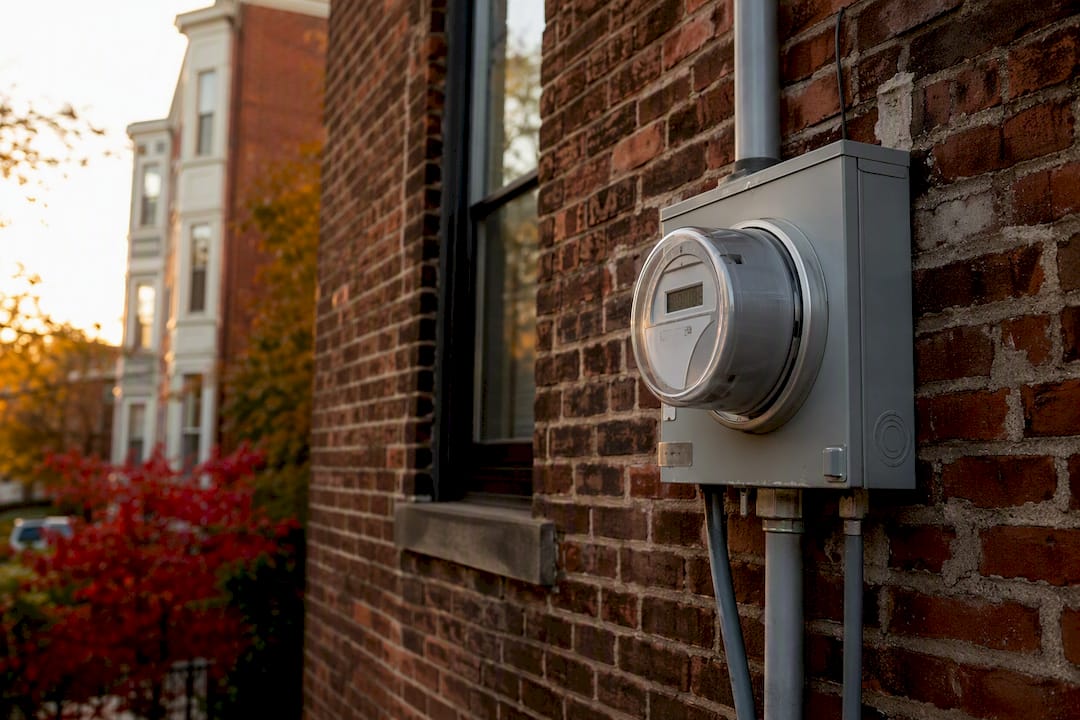
Gas service, where applicable, typically requires a separate account and sometimes an in-person inspection appointment, so build that into your timeline early. Water and sewer are usually billed by the city or a local water district rather than a private company, and many buildings include this in rent, so check your lease before assuming you need to set up a separate account.
Internet providers in the Boston area vary by neighborhood, with coverage that can differ block by block, so confirm availability at your specific address before you cancel New York service. For everything else, USPS mail forwarding covers the gap, but update your address directly with your bank, insurance carriers, and subscription services rather than relying on forwarding alone, since it typically only runs for a set period.
Keep a simple checklist: electric, gas, water, internet, and mail forwarding, each with a target start date tied to your move.
Registering Your Vehicle and Transferring Your Driver’s License in Massachusetts
Massachusetts requires new residents to register their vehicle and obtain a Massachusetts driver’s license within a set window after establishing residency, so this isn’t something to put off for months. You’ll need to visit the Massachusetts Registry of Motor Vehicles (RMV) with proof of residency, your current out-of-state license, and your vehicle’s title and registration documents.
Massachusetts also requires a vehicle inspection sticker, which differs from New York’s inspection process, so plan to get this done shortly after you arrive. If you’re bringing a car that was registered in New York, expect to pay Massachusetts registration fees and potentially sales or use tax adjustments depending on how recently you purchased the vehicle.
Your driver’s license transfer typically requires an eye exam and, depending on your circumstances, a written test, though most transfers from another US state skip the road test. Bring your Social Security card, proof of Massachusetts address (a lease or utility bill works), and your current license.
Check the official Massachusetts RMV website directly for current documentation requirements and appointment scheduling, since these details are updated periodically and vary based on your specific situation.
Understanding Tax Implications and Residency Requirements
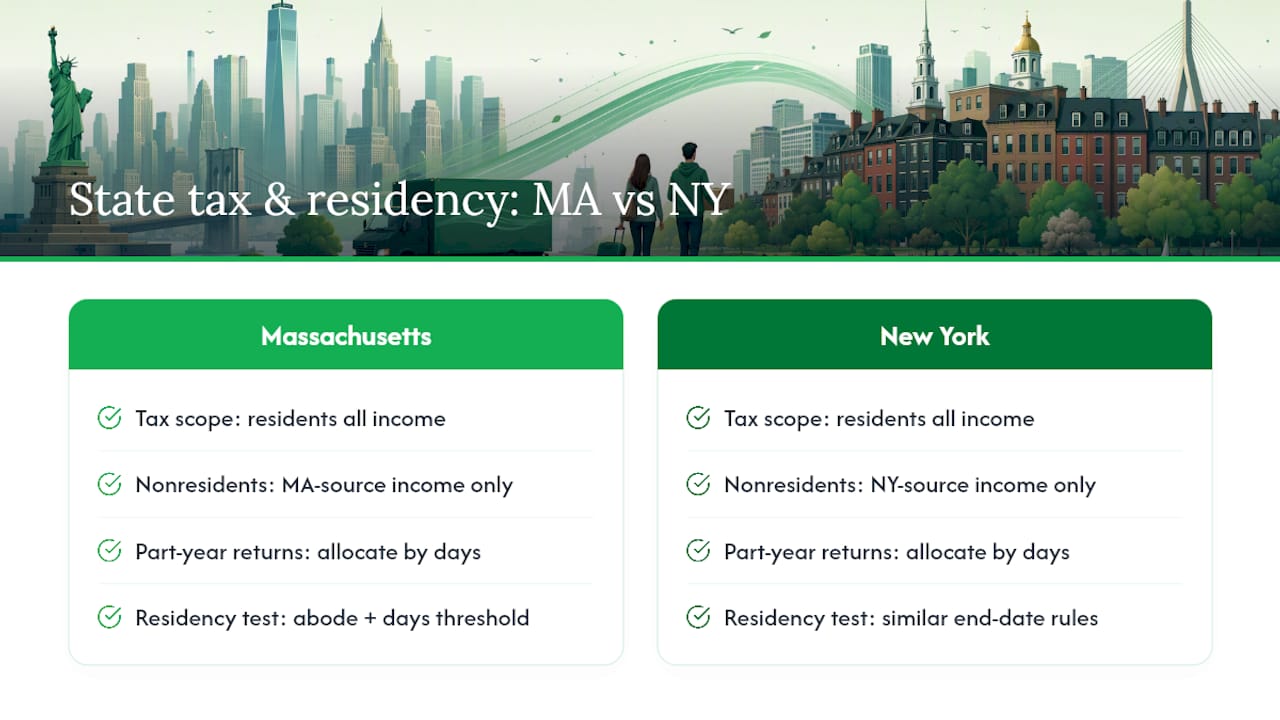
Massachusetts and New York calculate state income tax differently, and your residency status determines which state taxes which portion of your income during your move year. Massachusetts generally taxes residents on all income and nonresidents only on Massachusetts-source income, while New York applies similar rules in reverse for the portion of the year you lived there.
If you move mid-year, you’ll likely file part-year resident returns in both states, allocating income based on how many days you lived in each location. This is genuinely one of the more confusing parts of a cross-state move, and getting it wrong can mean either overpaying or facing a bill later.
Massachusetts residency for tax purposes generally kicks in once you maintain a permanent place of abode in the state and spend more than a set number of days there annually, though exact thresholds and rules can shift, so this is worth confirming with a tax professional or the Massachusetts Department of Revenue directly rather than relying on general guidance. The same caution applies to New York’s rules for determining when your New York residency officially ends. Keep documentation of your move date, lease signing, and utility start dates, since these often serve as evidence of when your residency actually changed.
Why a Local, Experienced Mover Matters for This Route
New York to Boston isn’t a short local move, and it isn’t a cross-country haul either, which means a lot of movers either overcharge for the distance or underprepare for the access challenges. Wellesleymoving handles long-distance relocations along this exact corridor, along with specialty services like lab equipment moving and professional packing for households with fragile or high-value items.
The practical advantages worth asking about: no deposit required to book, a fully vetted moving team, and a transparent inventory process where you know what’s on the truck before it leaves your old address. When you call for a quote, ask how they handle walk-up access, what their peak-season pricing looks like, and whether packing materials are included or billed separately. Those three questions tend to separate a reliable mover from one that surprises you on moving day.
— Inspirable
Get a Real Quote Before You Book Anything
Wellesleymoving gives you a straightforward alternative to guessing at moving costs from a generic online calculator: a specific quote based on your actual inventory, access points, and dates, with no deposit required to lock in your booking.
Before you request an estimate, pull together a rough room-by-room list of what you’re bringing, note any access issues like walk-ups or narrow stairwells at both addresses, and settle on a target moving window. That’s the information that turns a vague estimate into an accurate one. The long-distance moving checklist covers exactly what documentation and prep to have ready. If your items need specialty handling, the packing materials and services page outlines what’s available for fragile or high-value belongings.
Ready to see what your move actually costs? Request a quote from Wellesleymoving and get a number based on your real move, not a metro-wide average.
Sources
Before finalizing a budget, cross-check figures with NerdWallet’s cost calculator, BestPlaces’ city comparisons, and WalletHub’s school rankings. For registration and residency rules, confirm details directly with the Massachusetts RMV and your target school district.
- NerdWallet cost-of-living calculator: Boston vs Manhattan
- BestPlaces compare cities: Manhattan vs Boston cost of living
Recommended
- The Ultimate Massachusetts Moving Checklist: An 8-Week Timeline for a Stress-Free Move
- Moving from New York to Massachusetts: The Complete Relocation Guide (2026)
- 8 Steps for a Smooth Wellesley, MA Move
Made with BabyLoveGrowth, the SEO and backlink platform